TESEMORELIN

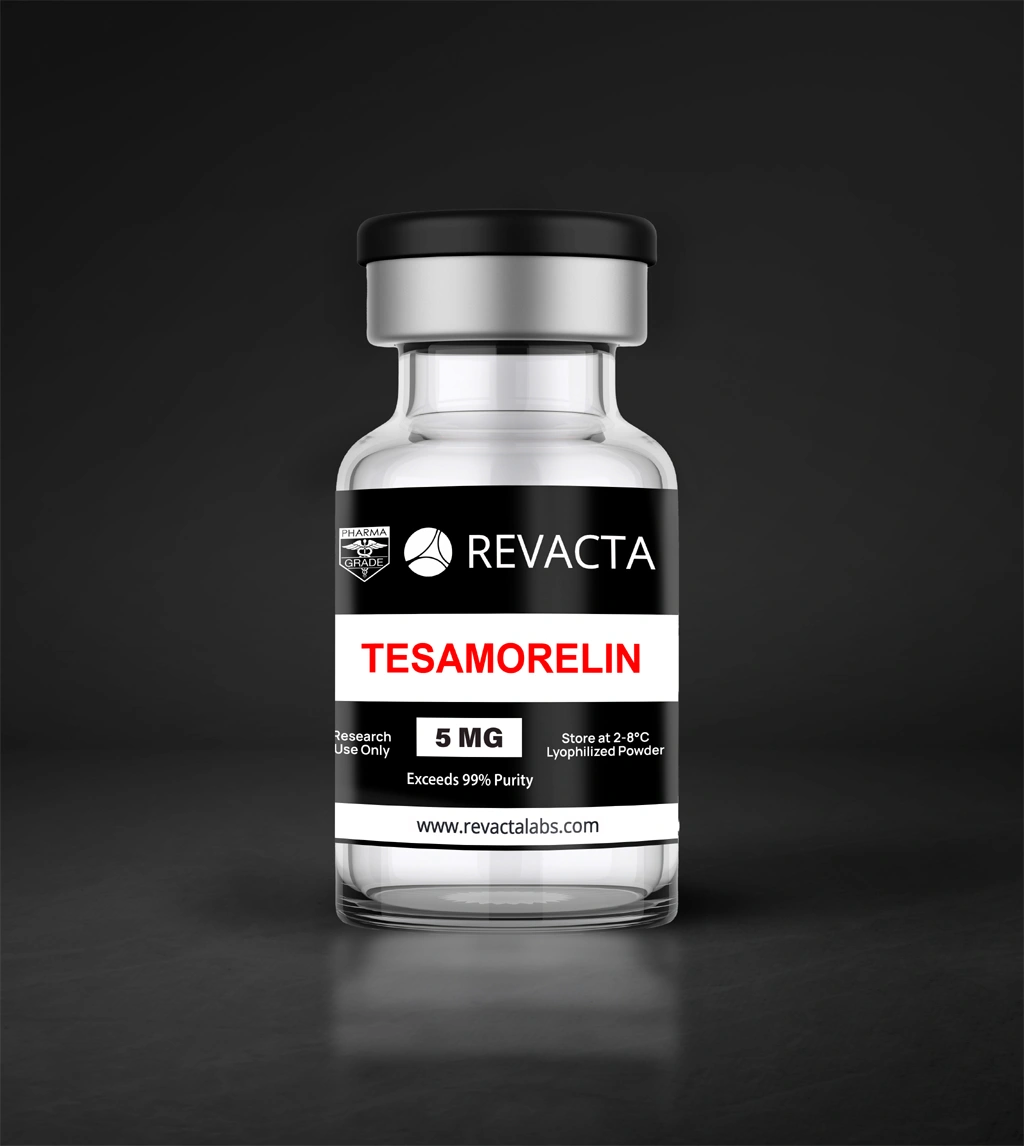
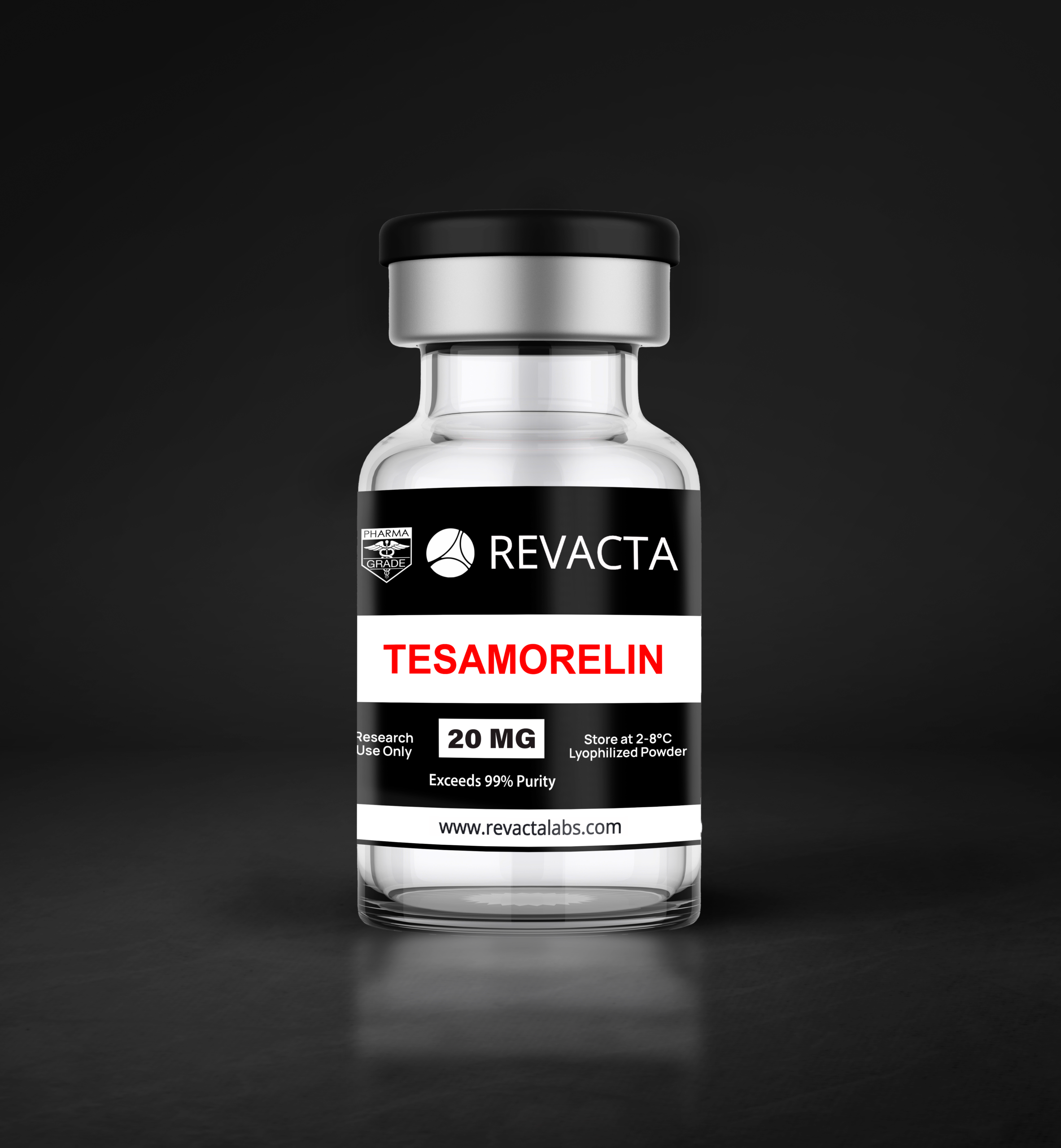
Tesamorelin (also known as TH9507) is a synthetic peptide analogue of human Growth Hormone–Releasing Hormone (GHRH), engineered to stimulate the pituitary gland’s natural production and release of growth hormone (GH). It consists of 44 amino acids that replicate the bioactive region of endogenous GHRH (1–44), but with a key modification — the substitution of trans-3-hexenoic acid (TFA) at the N-terminus — which significantly enhances the molecule’s stability and biological half-life.

Tesamorelin functions by binding to GHRH receptors on pituitary somatotroph cells, initiating a cascade that increases cyclic AMP (cAMP) and intracellular calcium, leading to a pulsatile release of growth hormone.
This makes Tesamorelin a powerful research compound for studies involving GH/IGF-1 axis regulation, lipid metabolism, body composition, and neuroendocrine signaling.

Price range: $49.00 through $95.00

$49.00
1 - 2
$39.20 (20% off)
3 - 5
$34.30 (30% off)
6 - 9
$29.40 (40% off)
10+
SKU N/A Category
Tesamorelin (also known as TH9507) is a synthetic peptide analogue of human Growth Hormone–Releasing Hormone (GHRH), engineered to stimulate the pituitary gland’s natural production and release of growth hormone (GH). It consists of 44 amino acids that replicate the bioactive region of endogenous GHRH (1–44), but with a key modification — the substitution of trans-3-hexenoic acid (TFA) at the N-terminus — which significantly enhances the molecule’s stability and biological half-life. Tesamorelin functions by binding to GHRH receptors on pituitary somatotroph cells, initiating a cascade that increases cyclic AMP (cAMP) and intracellular calcium, leading to a pulsatile release of growth hormone. This makes Tesamorelin a powerful research compound for studies involving GH/IGF-1 axis regulation, lipid metabolism, body composition, and neuroendocrine signaling.
Property
Specification
Peptide Type:
Synthetic Growth Hormone–Releasing Hormone (GHRH) analogue
Peptide Length:
44 amino acids
Molecular Formula:
C₂₁₃H₃₇₂N₇₂O₆₇
Molecular Weight:
~5135.9 Da
Sequence (1–44):
H-Tyr-Ala-Asp-Ala-Ile-Fhe-Thr-Asn-Ser-Tyr-Arg-Lys-Val-Leu-Gly-Gln-Leu-Ser-Ala-Arg-Lys-Leu-Leu-Gln-Asp-Ile-Met-Ser-Arg-Gln-Gln-Gly-Glu-Ser-Asn-Gln-Glu-Gln-Gly-Ala-Arg-Ala-Arg-Leu-NH₂
Structural Modification:
N-terminal modification with trans-3-hexenoic acid (TFA) to prevent DPP-IV degradation
Mechanism of Action:
Binds GHRH receptor → Activates adenylate cyclase → Stimulates GH release
Solubility:
Soluble in sterile water and most aqueous buffers
Storage:
≤ –20°C (protected from light and moisture)

Structural Highlights:

  • Modified GHRH(1–44) Analogue: Preserves full receptor-binding affinity while enhancing molecular stability.
  • N-terminal Lipophilic Substitution: Provides protection against enzymatic degradation (especially by DPP-IV) and improves bioavailability.
  • Amidated C-Terminus: Adds conformational stability and increases plasma half-life.
  • Mechanistic Target: GHRH receptor (class B GPCR) expressed on pituitary somatotrophs.

Tesamorelin is extensively utilized in endocrine and metabolic research as a selective GHRH receptor agonist. It serves as a valuable tool for studying growth hormone dynamics, lipolysis, adipose metabolism, and IGF-1 signaling.

Growth Hormone Axis Regulation

  • Stimulates endogenous GH secretion by mimicking natural GHRH activity.
  • Increases circulating insulin-like growth factor 1 (IGF-1) levels through GH-mediated hepatic synthesis.
  • Useful for exploring GH pulsatility, pituitary responsiveness, and age-related GH decline.

Body Composition and Fat Metabolism

  • Promotes lipolysis and reduction of visceral adipose tissue in research models.
  • Enhances lipid mobilization and fatty acid oxidation through GH-induced metabolic pathways.
  • Serves as a model for studying adipose tissue regulation and energy homeostasis.

Cellular and Metabolic Effects

  • Facilitates protein synthesis, cell proliferation, and mitochondrial activation in GH-responsive tissues.
  • Increases nitrogen retention and amino acid uptake in muscle and liver cells.
  • Allows investigation into IGF-1–dependent growth, repair, and recovery processes.

Cognitive and Neuroendocrine Research

  • GH and IGF-1 have been shown to play roles in neurogenesis and synaptic plasticity.
  • Tesamorelin is used in research to explore GH-mediated neuroprotective mechanisms and metabolic-cognitive interactions.

This product is supplied strictly for laboratory research use only. It is not a drug, food, or cosmetic and must not be administered to humans or animals. Proper handling procedures and safety protocols should be followed by trained professionals when working with this material.

BAC WATER

Price range: $6.00 through $9.99

SELANK

$25.00

Melanotan 2

$34.00

PT 141

$34.00

Related Product

Disclaimer: For Research Use Only

All products and information presented on this website are intended solely for laboratory and scientific research purposes. Nothing contained herein should be interpreted as a recommendation, endorsement, or authorization for human consumption, medical use, or diagnostic application.

Any references to specific peptides, studies, or potential biological functions are provided strictly for informational and educational purposes. Such content must not be considered medical, health, or legal advice, nor encouragement for non-research use.

All compounds are designed for controlled research environments and may be handled only by qualified professionals familiar with appropriate laboratory procedures and regulations. Customers and researchers are urged to consult with scientific, medical, or legal experts before ordering or utilizing any materials.

Revacta Labs promotes the ethical, safe, and lawful study of research-grade materials and expects all users to adhere to applicable local and federal guidelines. This disclaimer applies to all website content, communications, and products offered by Revacta Labs and is subject to change without notice.
Scroll to Top

What are you looking for today?