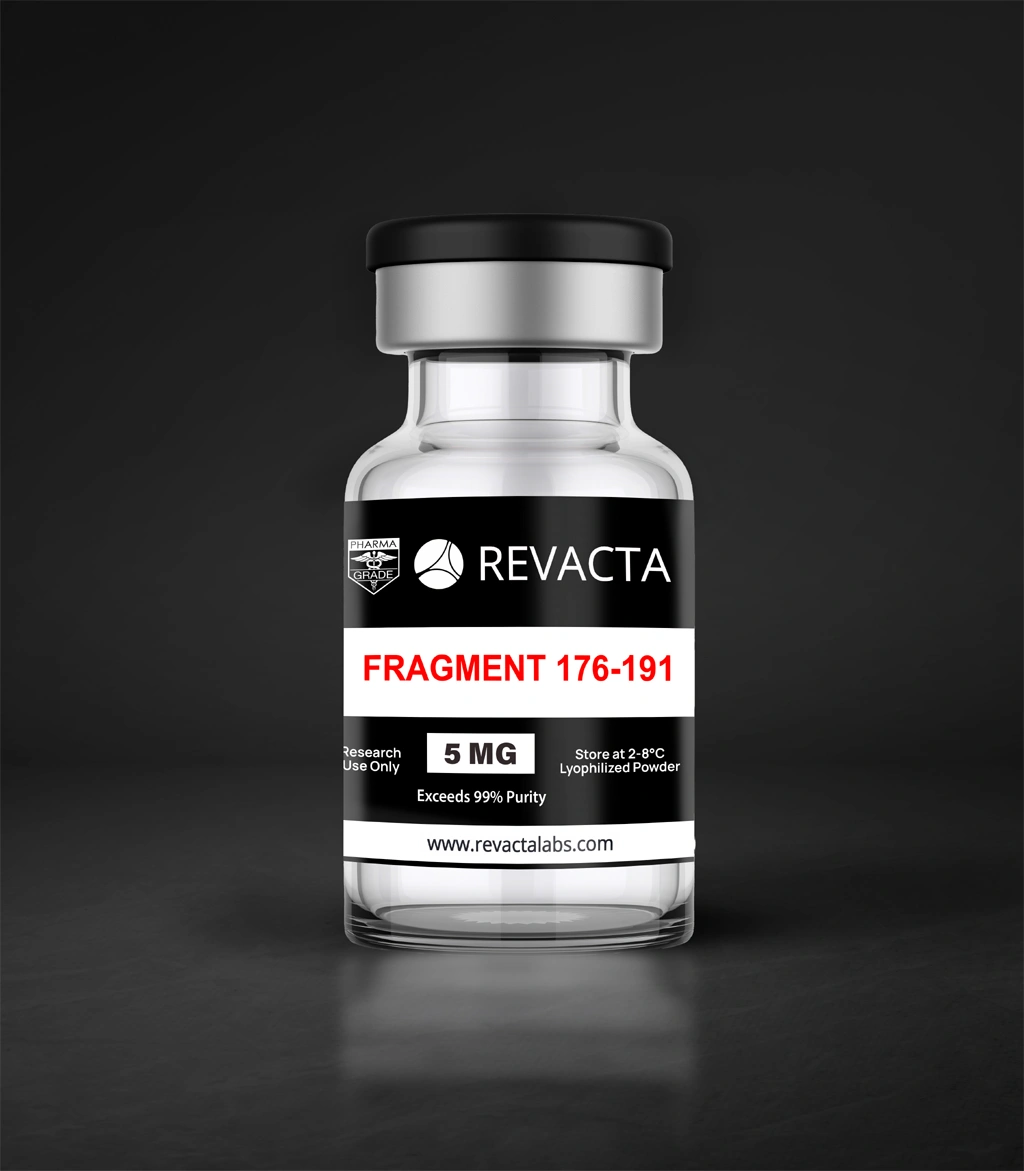
HGH Fragment 176-191 is a synthetic peptide fragment derived from the human Growth Hormone (HGH) molecule, encompassing amino acid residues 176 through 191 at the C-terminal end of the 191-amino acid HGH polypeptide.
This short peptide sequence retains the primary lipolytic (fat-mobilizing) domain of the native growth hormone but lacks its insulin-antagonistic and proliferative effects, allowing researchers to isolate and study HGH’s metabolic and fat-regulatory properties without influencing growth factor pathways.
In laboratory research, Fragment 176-191 is utilized as a GH-derived lipolytic model peptide to investigate fat metabolism, energy expenditure, mitochondrial function, and obesity-related metabolic regulation.
Its selective mechanism of action makes it an ideal tool for studying the biochemical pathways of lipid oxidation and adipocyte signaling independent of full-length HGH activity.
$44.00 – $72.00Price range: $44.00 through $72.00
Structural Highlights:
Mechanism of Action
Fragment 176-191 exerts its primary effects on adipose tissue metabolism. Research demonstrates that it enhances lipolysis (the breakdown of stored fat) and inhibits lipogenesis (the creation of new fat cells).
Mechanistically, it operates by:
Unlike full-length Growth Hormone, Fragment 176-191 does not raise insulin resistance, blood glucose levels, or IGF-1 expression, allowing targeted study of GH-dependent fat metabolism.
Lipolysis and Fat Metabolism Research
Energy Regulation and Mitochondrial Function
Anabolic and Regenerative Biology
Endocrine and Feedback Mechanism Studies
This product is supplied strictly for laboratory research use only. It is not a drug, food, or cosmetic and must not be administered to humans or animals. Proper handling procedures and safety protocols should be followed by trained professionals when working with this material.
Disclaimer: For Research Use Only
All products and information presented on this website are intended solely for laboratory and scientific research purposes. Nothing contained herein should be interpreted as a recommendation, endorsement, or authorization for human consumption, medical use, or diagnostic application.
Any references to specific peptides, studies, or potential biological functions are provided strictly for informational and educational purposes. Such content must not be considered medical, health, or legal advice, nor encouragement for non-research use.
All compounds are designed for controlled research environments and may be handled only by qualified professionals familiar with appropriate laboratory procedures and regulations. Customers and researchers are urged to consult with scientific, medical, or legal experts before ordering or utilizing any materials.
Revacta Labs promotes the ethical, safe, and lawful study of research-grade materials and expects all users to adhere to applicable local and federal guidelines. This disclaimer applies to all website content, communications, and products offered by Revacta Labs and is subject to change without notice.